|
 |
 |
|
The Mercury Theatre on the Air

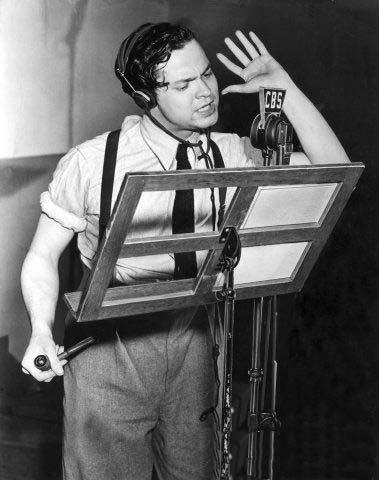 Before creating cinematic masterpieces like "Citizen Kane", "The Magnificent Ambersons", and "Touch of Evil", wunderkind Orson Welles had already established himself on stage, performing with the legendary Katharine Cornell in productions of "Romeo and Juliet" and "Candida" in 1934. He then teamed up with producer John Houseman in 1935 to form a stormy and intense three-year partnership collectively known as the Mercury Theatre that, according to radio historian John Dunning, "created some of the most startling and talked-about theater New York had seen in decades." Before creating cinematic masterpieces like "Citizen Kane", "The Magnificent Ambersons", and "Touch of Evil", wunderkind Orson Welles had already established himself on stage, performing with the legendary Katharine Cornell in productions of "Romeo and Juliet" and "Candida" in 1934. He then teamed up with producer John Houseman in 1935 to form a stormy and intense three-year partnership collectively known as the Mercury Theatre that, according to radio historian John Dunning, "created some of the most startling and talked-about theater New York had seen in decades."
But between "The Cradle Will Rock" and "Citizen Kane", Welles frequently hung his hat in the medium of radio; he had joined the cast of "The March of Time" as a regular in 1934 and was finishing his first season (1937-38) in the starring role of Mutual's "The Shadow" when CBS Radio offered both him and Houseman the opportunity to bring the much-talked-about Mercury troupe to the airwaves with a weekly one-hour dramatic program beginning July 11, 1938. Houseman was a little spooked by the whole prospect, realizing that the two of them had only two weeks to select a property, cast it, rehearse it, and perform it. Legend has it that, after Welles scrapped what was to be their first broadcast -- an adaptation of "Treasure Island" -- less than a week before the show's debut, he and Houseman worked for seventeen hours straight at a 24-hour New York eatery putting the finishing touches on an adaptation of Bram Stoker's "Dracula". Three days later, the show was broadcast as the premiere installment of what was finally titled "The Mercury Theatre on the Air".
The Mercury Theatre series was scheduled for a nine-week run over CBS, but the favorable critical buzz convinced the network to continue the series through the fall, moving it to Sunday nights beginning September 11. It is interesting to note that the program was sustained, which means that the network was footing the bill for nothing more than a little prestige. This corporate largesse was not uncommon at CBS in the 1930s, with "The Columbia Workshop" and many of Norman Corwin's works being good examples of the practice; William S. Paley, chairman of the "Tiffany Network," may have been a businessman, but he was also an individual with insight and taste, often putting programs on without expecting any kind of financial recompense -- a far cry from broadcasting today, where the bottom line is everything.
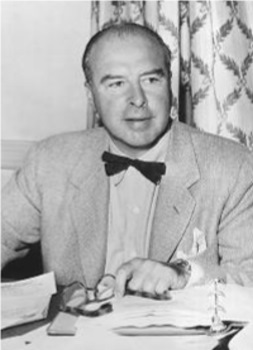 Sustained programs were fortunate in that they could afford to be a little more daring, what with not having to wrangle with sponsors by wondering if a script was going to offend listeners (and potential consumers) somewhere out in South Succotash. Programs that were sustained also encouraged experimentation, both in scripting and in sound effects; a Mercury production of "The Count of Monte Cristo", included in this collection, featured the story's dungeon scenes being played from the floor of a CBS restroom because the acoustics were ideal to recreate the subterranean reverberation. A microphone was placed inside a toilet bowl with the stopper left open, allowing, as Houseman later recounted, "a faithful rendering of the waves breaking against the walls of the Chateau D'If." Sustained programs were fortunate in that they could afford to be a little more daring, what with not having to wrangle with sponsors by wondering if a script was going to offend listeners (and potential consumers) somewhere out in South Succotash. Programs that were sustained also encouraged experimentation, both in scripting and in sound effects; a Mercury production of "The Count of Monte Cristo", included in this collection, featured the story's dungeon scenes being played from the floor of a CBS restroom because the acoustics were ideal to recreate the subterranean reverberation. A microphone was placed inside a toilet bowl with the stopper left open, allowing, as Houseman later recounted, "a faithful rendering of the waves breaking against the walls of the Chateau D'If."
Although producer Houseman was chiefly responsible for paring down the "fat Victorian monsters" that served as the material for much of the series' plays (he would later hire a young writer named Howard Koch to take over the scripting chores), and conductor Bernard Herrmann provided the excellent scoring for the various productions, there was very little doubt that the show was an Orson Welles production. That is to say, the wonder that was Welles accepted a good deal of the credit as director, writer, and star. Listening to broadcasts of the show, even today one can't help but be a little awed by many of the productions, with even the lesser shows always having a little something distinctive to recommend them. One would also be remiss, however, if it wasn't pointed out that Welles' repertory cast -- Martin Gabel, Ray Collins, George Coulouris, Everett Sloane, Alice Frost, and Agnes Moorehead, to name only but a few -- deserve every bit of the credit for the fine acting that permeates each and every installment.
As previously noted, CBS switched "The Mercury Theatre" to Sunday nights in mid-September, continuing to support the program despite very tough competition on NBC: "The Chase and Sanborn Hour", featuring ventriloquist Edgar Bergen and dummy Charlie McCarthy. The idea was to present an alternative to those individuals who didn't listen regularly to what was at the time the number one show in radio. On October 30, 1938, many listeners did an early version of "channel surfing" and switched from Bergen over to Welles and company's broadcast: a play chosen for the Halloween holiday and adapted from H.G. Wells' classic science fiction novel "The War of the Worlds". Because many in the audience had not heard Welles' broadcast from the beginning, a percentage of them (though not nearly as many as have been previously documented) convinced themselves that there was an actual Martian invasion taking place at that moment and went full-gonzo-berserk. "Worlds" would become the most famous -- and in some ways, the most notorious -- of all the Mercury Theatre radio productions.
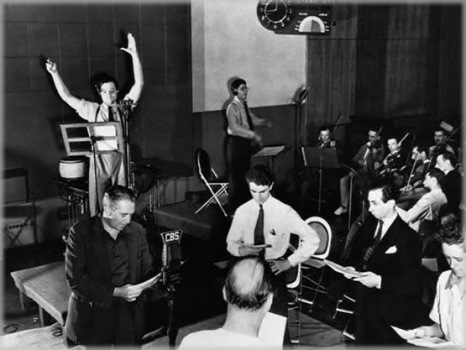 The resulting publicity and press put Welles and company on the map, making Welles' name a household word and securing the series a sponsor in Campbell Soups, which is why the show was rechristened "The Campbell Playhouse" beginning on December 9, 1938. The first-class status now awarded to the show by the sponsor's cash was both a blessing and a curse, however; the show's continued run may have been guaranteed but now big-name stars would be lured to each broadcast, much in the style of "The Lux Radio Theatre", crowding out many of the Mercury's supporting players. ("Lux" had previously demonstrated that big-name talent didn't necessarily always guarantee great acting.) "The Campbell Playhouse" continued as a weekly hour until March 31, 1940, scaling back to a half-hour in November of that year without Welles, who at the time had his hands full with "Citizen Kane", before ringing down the curtain June 13, 1941. The program experienced a brief revival in 1946 as "The Mercury Summer Theatre", which reunited Welles with some former Mercury thespians like Barrier, Frost, and Moorehead The resulting publicity and press put Welles and company on the map, making Welles' name a household word and securing the series a sponsor in Campbell Soups, which is why the show was rechristened "The Campbell Playhouse" beginning on December 9, 1938. The first-class status now awarded to the show by the sponsor's cash was both a blessing and a curse, however; the show's continued run may have been guaranteed but now big-name stars would be lured to each broadcast, much in the style of "The Lux Radio Theatre", crowding out many of the Mercury's supporting players. ("Lux" had previously demonstrated that big-name talent didn't necessarily always guarantee great acting.) "The Campbell Playhouse" continued as a weekly hour until March 31, 1940, scaling back to a half-hour in November of that year without Welles, who at the time had his hands full with "Citizen Kane", before ringing down the curtain June 13, 1941. The program experienced a brief revival in 1946 as "The Mercury Summer Theatre", which reunited Welles with some former Mercury thespians like Barrier, Frost, and Moorehead
Orson Welles is considered by many to be a tragic figure in cinema, due immeasurably to the fact that since his first film is considered his finest by both audiences and critics, he had no other place to go afterward but down. As talented as Welles was, he found himself in later years taking any job that was offered him in order to fund his independent film projects; his reputation was such that none of the studios would let him near a soundstage, unless it was as an actor. He simply could not keep his excesses in check...but as Richard Wilson relates in Leonard Maltin's "The Great American Broadcast", radio was an entirely different ballgame:
"Radio was the only medium that imposed a discipline that Orson would recognize... and that was the clock. When it came time for Mercury to go on the air, there was no denying it. I can't think of one theater production...that was not postponed, but [in] radio, he knew every week that clock was ticking, that red light [would come] on and say "On the Air." And good or bad, right or wrong, boy, that was it. It was the only discipline Orson was able ever to accept."
Radio Archives is pleased and proud to introduce this impressive collection: ten immortal broadcasts of "The Mercury Theatre on the Air" as originally heard between July and November of 1938. All of the programs have been transferred directly from the highest quality first generation master recordings and painstakingly restored for the best possible audio quality, making these the finest sounding versions of these broadcasts ever made available to the public.
Dracula
The first program in the celebrated series is a dramatization of Bram Stoker’s novel about a vampire on the prowl in London. With Orson Welles, Martin Gabel, Agnes Moorehead, George Coulouris, Ray Collins, Karl Swenson, Elizabeth Farah, and announcer Dan Seymour.
Monday, July 11, 1938 – 60:00 - CBS, sustaining
A Tale of Two Cities
Welles and his troupe present a dramatization of Charles Dickens’ classic novel set against the background of revolutionary 18th-century France. With Orson Welles, Martin Gabel, Ray Collins, Edgar Barrier, Frank Readick, Eustace Wyatt, Kenny Delmar, Betty Garde, Erskine Sanford, Mary Taylor, and announcer Dan Seymour.
Monday, July 25, 1938 – 60:00 – CBS, sustaining
Three Short Stories
In a change of pace, the Mercury Theatre dramatizes three short stories: "I’m a Fool" by Sherwood Anderson, Saki's "The Open Window", and Carl Ewald's "My Little Boy". With Orson Welles, Edgar Barrier, Ray Collins, William Alland, Brenda Forbes, Anna Stafford, Betty Garde, Kingsley Colton, Estelle Levy, and announcer Dan Seymour.
Monday, August 8, 1938 – 60:00 – CBS, sustaining
Abraham Lincoln
John Drinkwater’s play "Abraham Lincoln," combined with excerpts from Lincoln’s speeches, inspires this stirring dramatic presentation on the wartime life of the sixteenth President of the United States. With Orson Welles, Ray Collins, George Coulouris, Karl Swenson, Agnes Moorehead, Edwin Jerome, Joseph Holland, Carl Frank, William Alland, and announcer Dan Seymour.
Monday, August 15, 1938 – 60:00 – CBS, sustaining
The Affairs of Anatol
Arthur Schnitzler’s classic novel about a delightful roué and his life in pre-WWI Vienna. With Orson Welles, Alice Frost, Helen Lewis, Arlene Francis, Ray Collins, William Alland, and announcer Dan Seymour.
Monday, August 22, 1938 – 60:00 – CBS, sustaining
The Count of Monte Cristo
Alexandre Dumas’ classic tale of young Edmund Dantes, who is imprisoned on the false testimony of his "friends" and later emerges as the wealthy Count of Monte Cristo. The program opens with a brief war bulletin about Germany and Czechoslovakia. With Orson Welles, Ray Collins, Eustace Wyatt, George Coulouris, Edgar Barrier, Paul Stewart, Sidney Smith, Richard Wilson, William Alland, Anna Stafford, and announcer Dan Seymour.
Monday, August 29, 1938 – 60:00 – CBS, sustaining
The Man Who Was Thursday
G.K. Chesterton is the author of this incredible metaphysical thriller about anarchists, given a full fire-and-brimstone dramatization by the Mercury players. With Orson Welles, Eustace Wyatt, Edgar Barrier, Joseph Cotten, George Coulouris, Ray Collins, Paul Stewart, Erskine Sanford, Anna Stafford, Alan Devitt, and announcer Dan Seymour.
Monday, September 5, 1938 – 60:00 – CBS, sustaining
The Immortal Sherlock Holmes
Welles himself adapted this radio dramatization of the play "Sherlock Holmes" by William Gillette, based on the famous detective created by Sir Arthur Conan Doyle. With Orson Welles, Ray Collins, Edgar Barrier, Eustace Wyatt, Mary Taylor, Brenda Forbes, Morgan Farley, Richard Wilson, Alfred Shirley, William Alland, Arthur Anderson, and announcer Frank Gallop.
Sunday, September 25, 1938 – 60:00 – CBS, sustaining
Around the World in 80 Days
Orson Welles scripted this adaptation of Jules Verne’s classic novel centering on the exploits of Phileas Fogg, a perennially punctual individual who’s undertaken a most unusual wager. With Orson Welles, Al Swenson, Arlene Francis, Edgar Barrier, Eustace Wyatt, Frank Readick, Ray Collins, Stefan Schnabel, William Alland, and announcer Dan Seymour.
Sunday, October 23, 1938 – 60:00 – CBS, sustaining
The Pickwick Papers
An entertaining adaptation of Charles Dickens’ novel chronicling the Pickwick Club and the numerous legal entanglements of Mr. Pickwick. With Orson Welles, Ray Collins, Frank Readick, Alfred Shirley, William Podmore, William Pringle, Elliott Reid, Mary Wickes, Eustace Wyatt, Brenda Forbes, MacGregor Gibbs, Edgar Barrier, and announcer Dan Seymour.
Sunday, November 20, 1938 – 60:00 – CBS, sustaining
The Mercury Theatre -- on the Air!
by Craig Wichman, Founder Quicksilver Radio Theater
"Orson was a genius...and a pain in the ---!"
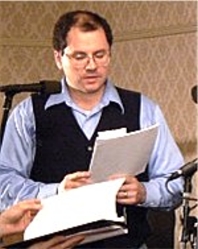 So says my dear friend Arthur Anderson, former Lucky Charms Leprechaun, and original male juvenile with the storied Mercury Theatre. As Arthur was "present at the creation," in the Merc's breakthrough stage production of “Julius Caesar”, I think we can take his word that Welles was both of those things. So says my dear friend Arthur Anderson, former Lucky Charms Leprechaun, and original male juvenile with the storied Mercury Theatre. As Arthur was "present at the creation," in the Merc's breakthrough stage production of “Julius Caesar”, I think we can take his word that Welles was both of those things.
Of course, he was also an actor, a writer, a director, a producer, a magician, and a witty variety/talk show guest. And in addition to all those things -- or rather, I think, above and through all those things --
-- he was a storyteller.
My wife and I have found in listening to his audio work (which many don't realize continued off and on until very late in his life) and watching his video work (including the almost home-movie style fragments of his later work, recently released) that though Welles' work may not always be totally successful in the usual sense of that word, it is almost never boring. The man's mind, his spirit, his pure love of a good story well told, almost always carries the day.
And no place more so in his half-a-century career, across many media, than in the radio shows offered here in this Radio Archives collection, “The Mercury Theatre on the Air”.
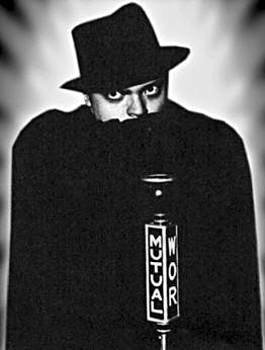 After a precocious private school career, and a meteoric one on stage, the 23 (yes, 23!) year-old Welles had also become a seasoned performer at the microphone. As his run as “The Shadow” ran down, the story goes that he was offered two new projects in 1938: a Sherlock Holmes program, and an anthology series. Either network job would supply much-needed capital for his grandiose plans for the Mercury on stage, and for his own increasingly grandiose life (throughout his career, Welles would use money raised from one project to fund another). He went with the anthology, “The Mercury Theater On the Air” -- actually known for the first few weeks as “First Person Singular”, as that was the type of story that Orson wisely knew would work wonderfully in the new medium of radio. After a precocious private school career, and a meteoric one on stage, the 23 (yes, 23!) year-old Welles had also become a seasoned performer at the microphone. As his run as “The Shadow” ran down, the story goes that he was offered two new projects in 1938: a Sherlock Holmes program, and an anthology series. Either network job would supply much-needed capital for his grandiose plans for the Mercury on stage, and for his own increasingly grandiose life (throughout his career, Welles would use money raised from one project to fund another). He went with the anthology, “The Mercury Theater On the Air” -- actually known for the first few weeks as “First Person Singular”, as that was the type of story that Orson wisely knew would work wonderfully in the new medium of radio.
But I don't think that this new endeavor was only about the money. Welles was always, from childhood, in love with language -- and at its best, the audio drama is one of the most direct ways to share a text. Orson once said, "The camera is your enemy -- but the microphone is your friend." Or, as the narrator puts it in the Mercury's adaptation of Dickens' "Christmas Carol", “…(he was) as near to him as I am now to you -- and I am standing, in the spirit, at your elbow..."
Few have ever better understood this relationship -- or used it as well to get inside an audience's head.
But these early works of a master (those in radio much bemoaned the fact when Orson "abandoned them" for the movies) has rarely been available in a form worthy of it. Personally, it breaks my heart that in a digital age that has seen simply amazing video and audio restoration of classic films, radio -- that brilliant mass-media art form of the 20th Century -- has been largely ignored.
But not totally...
If you've only heard programs from scratchy old discs, poorly transferred, on hissy tapes, be prepared to be amazed. Radio Archives has given these shows a proper rebirth. In fact, as you listen to them in this collection, you are likely hearing them better than most AM radio listeners picked them up through the atmosphere the nights they first happened!
And you know what's even clearer than the sound? The sheer storytelling. Some notes:
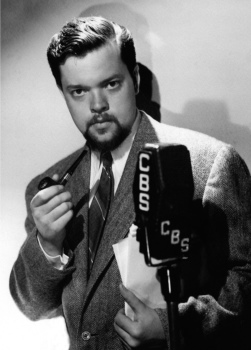 Dracula Dracula
The very first “First Person” was going to be "Treasure Island" -- with room for a wonderful star turn by the aforementioned Arthur Anderson as Jim Hawkins. But he would have to wait a week. For at the last minute -- a recurring habit of his -- Welles decided to do Bram Stoker's classic horror tale. Its narrated format fits like a glove, and there is an urgency to the piece -- perhaps partly a result of the last-minute pace with which it had to be prepared. This "this story must be told!" quality would become one of Welles' hallmarks. And it is obvious from his introduction that he had great respect for this story -- in fact, he later tried to mount a film production of it. There is no camping here; Orson plays a very forbidding Count (with voice backed by an unnerving electronic hum), with all of the evil intact. And the Mercury stock company - Ray Collins, Agnes Moorehead, George Coulouris, Martin Gabel -- is in fine form.
Three Short Stories: I’m a Fool, The Open Window, My Little Boy
An early example of the director's love for the "omnibus" form, which he would use often in his later radio series and in film up until his last completed movie, “F for Fake”.
Abraham Lincoln
Orson, the lover of great words, performed the speeches of Abraham Lincoln several times in different venues. Here, passages from them are interspersed within an adaptation of the play by John Drinkwater that had been a Broadway hit decades before, starring frequent Lincoln portrayer Frank McGlynn.
The Affairs of Anatol
A very "European" show, with deft playing by Welles, Arlene Francis, and Alice Frost, who seem to be having a grand time dancing to Arthur Schnitzler's champagne-bubbly Viennese love waltz.
The Count of Monte Cristo
A miraculously successful condensation of Alexander Dumas' epic morality play. A wonderful performance by Orson, with all of the gripping, touching, and finally, shocking, moments of the classic on hand. The sequence with Edmund Dantes and the old Abbe Faria in the horrid Chateau D'if is tour-de-force audio drama -- a masterful blend of voice, music, and sounds.
The Man Who Was Thursday
An (in)famous episode because Welles insisted on adapting this personal favorite personally -- and per usual (see “Dracula” above), left things to the last minute. So a patchwork script was performed with spotty rehearsal -- but amazingly, G.K. Chesterton's strange, allegorical spy-story-cum-theology-essay comes off pretty well!
The Immortal Sherlock Holmes
(See mention of Orson's almost-series as The Great Detective, above.) A wonderful, barnstorming production of the classic melodrama. Welles plays Sherlock much in the mature, mid-Atlantic-voiced style of that play's author, William Gillette; perhaps he had seen one of his farewell tours, or heard one of his two now-lost radio turns in the role. (And if you think you hear just a hint of Lamont Cranston at moments, well...) Ray Collins is an excellent true-to-Doyle, non-bumbling Dr. Watson; and, in a smart bit of radio adaptation, he intros the story as in Doyle originals. Here, the good doctor drops several tantalizing mentions of mysteries that Sir Arthur referred to in his books -- but never actually recounted...
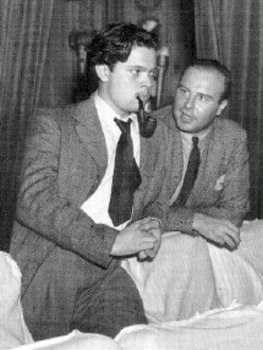 Around the World in Eighty Days Around the World in Eighty Days
As with "Monte Cristo," much of Jules Verne's long novel had to be compressed for the one-hour slot. But that, if anything, adds to the rhythm of Phileas Fogg's race against time -- as does Bernard Herrmann's wonderful, "tick-tick-tick" score. And this is another piece, ala the story of Falstaff, and his beloved “Moby Dick”, that Welles would return to again -- in a stage musical version, years later.
And of course, though it is not present in this set, this is also the fabled season that contained the Mercury's little surprise when Halloween rolled around. Though I can tell you that when I assisted German radio producer Christian Blees in an interview with Bill Herz, he stressed that, contrary to some revisionist theorizing, "The War of the Worlds" was no brilliant conspiratorial plot to advance the careers of Orson and his partner John Houseman. In fact, he said that while the piece was in preparation, the company found it silly almost to the point of embarrassing. And that even after the broadcast, they didn't realize the size of what had happened until they went back to their own Mercury Theatre space for a rehearsal -- and found it full of reporters!
So...is there a common thread in all of these shows?
You bet. Rich enjoyment for the listener. The very talented cast and crew treat the pieces with great respect, and perform them with a rare understanding of this unique medium. And on that note, it's time that I fess up to a fact that only a handful of folks have tumbled to in the last few years:
There is another name for "mercury," of course -- "quicksilver". And my own gang, Quicksilver Radio Theater, owes a good deal to Welles. As with many folks of my generation, "The War of the Worlds" was the first network-era radio show that I ever heard, in a high school history class. And not long after that, a local station took to rerunning the legendary 1939 Mercury "Christmas Carol" featuring Lionel Barrymore (part of the second Mercury radio season, after the ballyhoo from "The War of the Worlds" had convinced Campbell's Soups to pony up the money to CBS for sponsorship.)
Those Mercury's gripped me, and I've never looked back!
Now, Quicksilver's director Jay Stern and I, and the rest of our talented gang, would no more imitate this group's work, any more than Welles' and company stole from the earlier performers that they loved. But one of Quicksilver’s mottos from the beginning has been, "timeless stories -- told as if for the first time" -- and that feeling of a story that needs to be told, and that you will want to hear, is also the backbone of Orson Welles' “Mercury Theatre on the Air”.
And if you are familiar with the work of Radio Archives, you'll know that you'll also be able to hear these terrific stories like never before. If you only know "Old Time Radio" (too quaint a term for such vibrant, still-effective work, I think) from bootleg LP's like the "The War of the Worlds" that I heard long ago, or from the dub of a cassette from an AM rebroadcast -- prepare your personal “Theater of the Imagination” for a real hit...
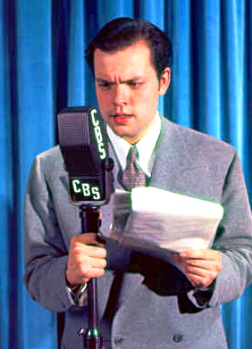 Radio Archives works from the original in-studio transcription discs, or the just-one-step-removed off-site aircheck discs, recorded at the time of broadcast. And, for the first time in recorded sound's history, many imperfections that might have happened when recording, or that have come with age, can now be removed. Not covered, in the only way that older technology allowed -- and which did as much harm as good -- but removed. If you haven't heard audio of this vintage in this quality before, you'll be amazed; aside from a few imperfections that cannot be removed without compromising the shows, you truly will feel that "you are there." And when you put this level of presentation together with the sterling production -- voice, sound effects, and music -- of Welles and cast, SFX performers like Ora Nichols, and musicians like Bernard Herrmann, you get involving drama of rare quality. Radio Archives works from the original in-studio transcription discs, or the just-one-step-removed off-site aircheck discs, recorded at the time of broadcast. And, for the first time in recorded sound's history, many imperfections that might have happened when recording, or that have come with age, can now be removed. Not covered, in the only way that older technology allowed -- and which did as much harm as good -- but removed. If you haven't heard audio of this vintage in this quality before, you'll be amazed; aside from a few imperfections that cannot be removed without compromising the shows, you truly will feel that "you are there." And when you put this level of presentation together with the sterling production -- voice, sound effects, and music -- of Welles and cast, SFX performers like Ora Nichols, and musicians like Bernard Herrmann, you get involving drama of rare quality.
In closing, as he does in this series of shows and generally did in his radio career, let's let Orson Welles himself take us out, in words he spoke at the time:
"...we plan to...treat radio with the intelligence and respect such a beautiful and powerful medium deserves.... The less a radio drama resembles a play, the better it is likely to be. This is not to indicate for one moment that radio drama is a lesser thing. It must be, however, drastically different...because the nature of the radio demands a form impossible (for) the stage. The images called up by a broadcast must be imagined, not seen. And so we find that radio drama is more akin to the form of the novel, to storytelling, than to anything else.... There is no place where ideas are as purely expressed as on the radio..."
There are still people who share this understanding of audio drama, and are using their talents and their hearts to tell stories worth the telling in this medium; but to this day, no one has ever done it better than Orson Welles and the Mercury Theater at their best.
Hear for yourself in this Radio Archives collection, “The Mercury Theatre on the Air”.
CRAIG WICHMAN studied with Stella Adler, and has since acted in all media, from Off-Broadway to Independent Film. Founder of the award-winning Quicksilver Radio Theater available through the Public Radio Exchange, he has been heard in several other modern radio drama series including the current “Twilight Zone” radio revival, and has been privileged to perform in many recreations of classic radio shows, in New York and elsewhere, alongside such luminaries as the Mercury Theatre's Elliot Reid.
|
|
|
 |
|
 |
|